Wood Fence Installation in Norman, OK
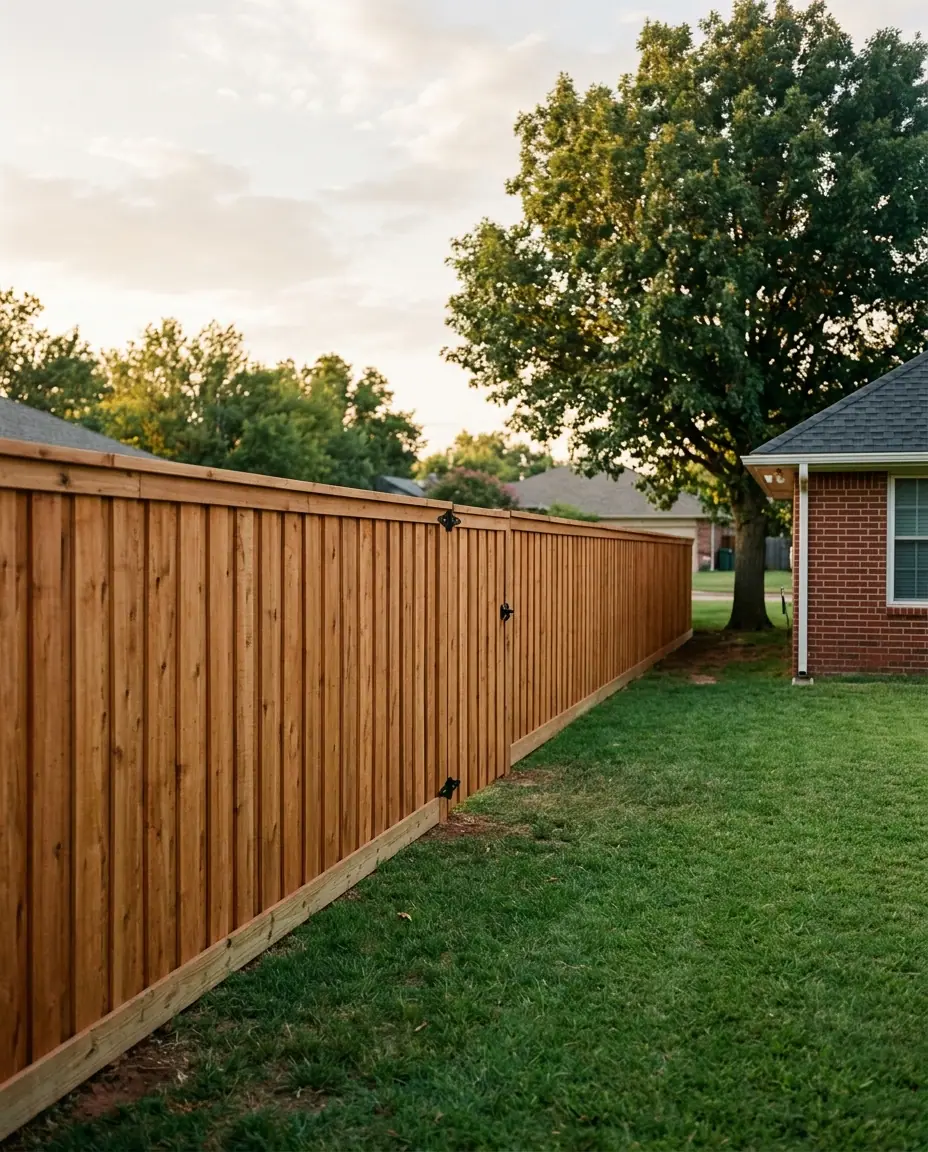
Ironclad Fence Norman builds wood fences in western red cedar and pressure-treated pine across Norman, OK and Cleveland County: side-by-side and board-on-board privacy fences, shadowbox, horizontal slat and picket fences, with wood gates to match. As a Norman, OK fence company, we build the frame to outlast the boards: 2-3/8″ galvanized steel posts set in concrete 24–36 inches deep, three rails on a 6-foot fence, ring-shank or galvanized fasteners and a treated kickboard that keeps the boards off the clay. Every project starts with a free on-site estimate and a written, itemized quote.
Why us
Why Choose Us for Wood Fence Installation in Norman, OK
A wood fence is only as good as the frame under it. We build that frame for central Oklahoma’s wind and shifting red clay.
-
Galvanized Steel Posts as Standard
A wood fence usually fails at the posts, where wet clay rots them at the ground line. We set 2-3/8″ galvanized steel posts in concrete and bracket the rails to them, so the frame outlives the boards. Wood posts are available if you prefer the look.
-
Fasteners That Hold
Pine and cedar shrink and swell with Oklahoma’s weather, and smooth nails work loose. We use ring-shank or galvanized nails and screws that grip the wood and won’t streak it with rust.
-
Boards Kept Off the Clay
A treated kickboard along the bottom keeps the pickets out of the soil and grass clippings, where wood rots first, and makes it harder for dogs to dig under.
-
The Right Wood for Your Yard
Cedar costs more and moves less; pine gives you the most fence for your budget. We’ll tell you where each one makes sense, including mixing cedar on the street side with pine at the back.
Services
Wood Fence Services in Norman, OK
From a simple pine backyard fence to a capped cedar board-on-board, here’s what we build in wood around Norman.
-
Cedar Privacy Fences
Western red cedar at 6 or 8 feet, the premium choice for privacy. Its natural oils resist rot and insects, and it stays flatter than pine as it dries, so boards keep a tighter line. Compare every privacy fence style we build. See cedar fences.
-
Pressure-Treated Pine Fences
Southern yellow pine treated against rot and termites: the most economical wood fence and the one in most Norman backyards. Ideal for long runs and big lots. More on pine fences.
-
Board-on-Board & Shadowbox
Board-on-board overlaps the boards so no gaps open as the wood shrinks. Shadowbox alternates boards on each side of the rails, so it looks the same from both yards and lets some wind through. More on board-on-board fences.
-
Horizontal Slat Fences
Horizontal boards give a clean, modern look. We set the posts closer together and use thicker boards or a center support so the long boards don’t sag between posts. More on horizontal fences.
-
Picket & Decorative Tops
Short picket fences for front yards and gardens, plus the details that finish a privacy fence: dog-ear or flat tops, a top cap and trim board, or a lattice topper.
-
Wood Gates on Steel Frames
Walk gates and double drive gates faced in the same wood as the fence. Wide gates are built on a welded steel frame so they don’t sag, and hung on heavier, deeper posts.
-
Staining & Sealing
Semi-transparent and solid stains with UV protection, applied once the wood is ready, to keep the color and slow cracking and warping. Plan to restain every 2 to 3 years. More on fence staining.
-
Wood Fence Repair & Replacement
Rotted posts, leaning runs and broken boards on an existing fence are covered on our fence repair page. When a fence is worn out, we tear it out and build new on the same line.
Materials
Cedar or Pine? Choosing Your Wood
Both woods make a good fence when they’re built on solid posts and stained on schedule. The difference is how they age and how much they move.
Western Red Cedar
Naturally resists rot and insects, shrinks and twists less, and starts a warm reddish brown that weathers to silver gray unless it’s stained. Typically lasts 15–20 years in Oklahoma with staining every 2–3 years. Best for street-facing runs and fences where looks matter.
Pressure-Treated Pine
Southern yellow pine with preservative forced deep into the wood against rot and termites. It moves more as it dries, so fasteners matter, and it needs to dry before staining. Typically lasts 10–15 years with staining every 2–3 years. Best for big backyards and long side runs.
How We Build a Wood Fence
- Posts
- 2-3/8″ galvanized steel posts set in concrete, 24–36 inches deep on a 6-foot fence and below the 12–18 inch frost line, 6–8 feet apart. Gate posts go deeper. Wood posts on request.
- Rails
- Three 2×4 rails on a 6-foot fence (top, middle and bottom), bracketed to steel posts; four on an 8-foot fence.
- Boards
- Cedar or pine pickets in dog-ear or flat-top styles, side by side, overlapped or alternated.
- Fasteners
- Ring-shank, galvanized or stainless nails and screws that grip as the wood moves and won’t rust-streak the boards.
- Finishing
- Treated kickboard, optional top cap and trim board, and stain once the wood has dried.
Cost
What Affects the Cost of a Wood Fence?
We price every wood fence after measuring the yard. Your written quote lists each of these as its own line, so you can see what an upgrade like cedar or a top cap adds.
Get a free wood fence estimate- Length and height
- Total footage, and 6 feet vs. 8 feet: a taller fence uses longer boards, an extra rail and deeper posts.
- Cedar or pine
- Cedar costs more than pressure-treated pine. Many homeowners use cedar where it shows and pine at the back.
- Style
- Board-on-board, shadowbox and horizontal designs use more boards than side by side, and horizontal needs more posts.
- Post type
- Galvanized steel posts cost more than wood up front and last far longer in clay soil.
- Gates
- The number of gates, and whether wide drive gates need a welded steel frame.
- Site and tear-out
- Slopes, rock, roots, tight access, and removing and hauling away an old fence.
- Finishing touches
- Top cap and trim, kickboards, dig guards and staining.
Timeline
How Long Does Wood Fence Installation Take?
Most wood fences go up in a few days once the materials are on site. Approvals and the weather are what stretch the schedule.
- From your call to the on-site estimate, typically
- 1–3 days
- For in-stock cedar, pine and steel posts to arrive
- 0–5 days
- To build a typical 100–250 foot backyard fence
- 1–3 days
- From request to finished fence for most homes
- 1–3 weeks
Permits or HOA approval can add 3–14 days before we start, and heavy rain delays digging until the clay drains. Staining comes later: cedar after a few weeks, new pine once it has dried, often a few weeks to a couple of months.
Process
Our 4-Step Wood Fence Installation Process
-
1. Free Estimate & Design
We measure the fence line, mark gates and talk through wood, style, height and top, then send a written, itemized quote.
-
2. Locates & Approvals
We call OKIE811 to mark buried utilities, check City of Norman and HOA rules, and pull any permit the fence needs.
-
3. Posts in Concrete
We pull a string line, set galvanized steel posts in concrete at the right depth and spacing, and let the concrete set.
-
4. Rails, Boards & Walkthrough
We bracket the rails, hang the boards, kickboard, trim and gates, then walk the fence with you and haul away the scraps.
Questions
Wood Fence FAQ — Norman, OK
How soon can I stain a new wood fence?
It depends on the wood. Cedar can usually be stained within a few weeks. New pressure-treated pine is still wet from the treatment and needs to dry first, usually a few weeks to a couple of months in Oklahoma weather. A simple test: sprinkle water on a board. If it soaks in, the wood is ready; if it beads up, wait. Staining too early traps moisture and the stain peels.
Which side of the fence faces the neighbor?
Most fences are built with the finished side, the side without rails showing, facing out toward the neighbor or the street. Many HOAs require it. If you want both sides to look finished, a shadowbox or board-on-board style with a top cap looks good from either side. We confirm the direction with you before we build.
Will my wood fence have gaps between the boards?
With standard side-by-side boards, small gaps usually open up as the wood dries and shrinks, especially pine. If you want no gaps at all, board-on-board overlaps each board on the one beside it, so you can't see through even after the wood shrinks. Shadowbox leaves deliberate gaps that are blocked from straight on but let some wind through.
Can you build a wood fence on a sloped yard?
Yes. There are two ways. A stepped fence keeps each section level and drops down at each post, which looks tidy but leaves triangle-shaped gaps at the bottom. A racked fence follows the slope so the bottom stays close to the ground. We'll recommend the one that suits your slope and fill any low gaps with a kickboard or trimmed boards.
What is a kickboard, and do I need one?
A kickboard is a horizontal pressure-treated board along the bottom of the fence. It keeps the pickets off the soil, where they would rot first, and it makes it harder for dogs to dig or push under. We recommend one on most wood privacy fences in Norman, because our clay holds moisture against anything that touches it.
How do I keep my wood fence from turning gray?
Sun and rain turn bare cedar and pine silver gray within a season or two. A penetrating stain with UV protection, applied once the wood is ready and renewed every 2 to 3 years, keeps the color and helps the boards resist cracking and warping. Clear sealers protect against water but not much against the sun, so semi-transparent stains usually last longer.
Can you match my HOA's fence style or my neighbor's fence?
Usually, yes. Send us your HOA guidelines and we'll match the required height, wood, style, top and stain color. To match a neighbor's fence, we look at the board size, spacing, top style and post type and build to the same design, so the two fences line up where they meet.
Free estimate
Get a Free Wood Fence Estimate
Tell us roughly how much fence you need, the height, and whether you’re leaning toward cedar or pine. We’ll call to set a time to measure, then send a written, itemized quote.