Pine Fence Installation in Norman, OK
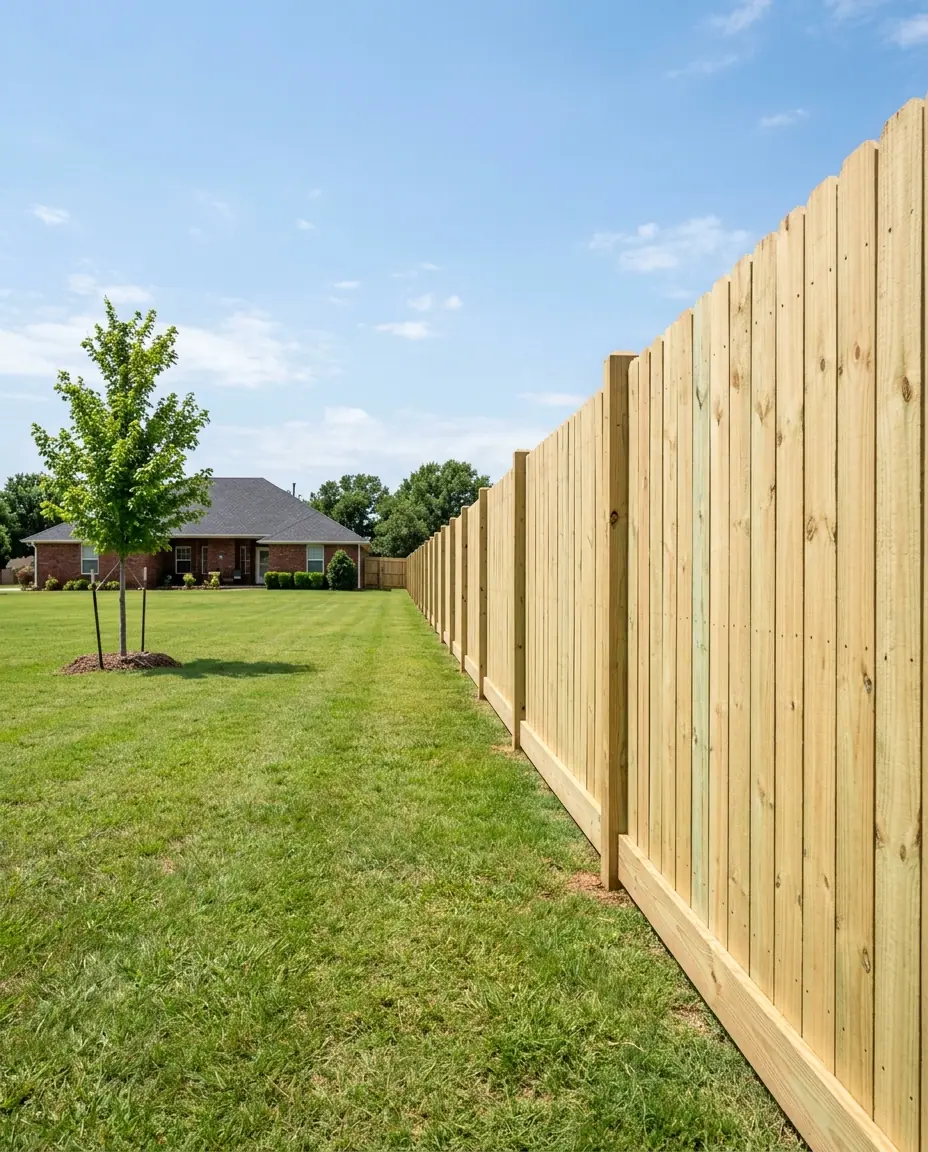
Ironclad Fence Norman builds pressure-treated pine fences across Norman, OK and Cleveland County: 6- and 8-foot privacy fences, board-on-board, picket and long-run backyard fences, the most economical wood fence for big lots. As a fence company in Norman, OK, we build pine on 2-3/8″ galvanized steel posts set in concrete, with hot-dipped galvanized ring-shank fasteners that stand up to the treatment and a treated kickboard that keeps the boards off the clay. For cedar and other wood options, see wood fence installation.
Why us
Why Choose Us for Pine Fences in Norman, OK
Pine gets a bad name from fences built on wood posts with cheap nails. Built on steel with the right fasteners, it’s a solid, long-lasting fence.
-
The Most Fence for Your Budget
Pine is the most economical wood fence we build, which makes it the natural pick for big backyards, long side runs and the parts of a yard nobody looks at.
-
Fasteners Made for Treated Wood
Modern treatments corrode plain steel. We use hot-dipped galvanized or stainless ring-shank nails that hold as pine shrinks and swells.
-
Steel Posts Under Pine Boards
Pine posts are the first thing to rot in Norman’s clay. Our galvanized steel posts keep the frame standing long after the boards would have outlasted wood posts.
-
Straight Talk About Shrinkage
New pine is wet. We’ll tell you what gaps to expect, when it’s ready to stain, and when board-on-board is worth it.
Services
Pine Fence Services in Norman, OK
Pressure-treated pine does most of the fencing work in Norman backyards. Here’s what we build with it.
-
Pine Privacy Fences
6-foot side-by-side pine privacy fences with dog-ear or flat tops: the standard Norman backyard fence. Compare styles on our privacy fence page.
-
8-Foot Pine Fences
Taller pine fences with a fourth rail, deeper posts and tighter spacing for sloped lots and two-story neighbors.
-
Pine Board-on-Board
Overlapped pine boards, so the gaps that open as pine dries never become a line of sight.
-
Long Runs & Large Lots
Back and side property lines on big lots and acreage, where pine keeps a long fence affordable.
-
Pine Picket Fences
Short pine picket fences for front yards and gardens, ready for a solid white or colored stain once the wood has dried.
-
Cedar Front, Pine Back
Put cedar on the side the street sees and pine on the back and side runs, matched in height and style.
-
Pine Gates
Walk and drive gates faced in pine on a welded steel frame, so the gate stays square as the wood moves.
-
Pine Staining
Semi-transparent and solid stains once the pine has dried, to cover the green tint and slow cracking and warping.
Know your pine
What to Expect From a Pine Fence
Pressure-treated pine behaves differently from cedar for its first year. Knowing why makes the difference between a fence you’re happy with and one that surprises you.
The First Few Months
Wet, green and moving
New treated pine arrives wet with a green tint. Over the first summer it dries, fades to tan, and shrinks enough to open small gaps between side-by-side boards. Some boards cup or twist a little. All of that is normal.
The Long Run
Typically 10–15 years in Oklahoma
Once it has dried and been stained, pine settles down. Renew the stain every 2–3 years, keep sprinklers and soil off the boards, and the boards will last; the steel posts underneath will outlast them.
Pine Details We Get Right
- Treatment
- Boards and rails rated for above-ground use; a ground-contact-rated kickboard where wood sits near the soil.
- Fasteners
- Hot-dipped galvanized or stainless ring-shank nails and screws that won’t corrode in treated wood.
- Rails
- Three rails on a 6-foot fence and four on an 8-foot fence, so boards have less room to cup.
- Kickboard
- A treated board along the bottom keeps pickets off the soil and slows dogs that dig.
- Stain timing
- Wait until water soaks into the wood instead of beading, usually a few weeks to a couple of months.
Cost
What Affects the Cost of a Pine Fence?
Pine is the economical wood choice, and length drives most of the total. Your written quote lists each of these as its own line.
Get a free pine fence estimate- Length and height
- Total footage, and 6 vs. 8 feet with the extra rail and deeper posts.
- Style
- Side-by-side is the most economical; board-on-board uses more boards.
- Posts
- Galvanized steel posts cost more than pine posts up front and last far longer.
- Gates
- How many, how wide, and steel-framed drive gates.
- Site and tear-out
- Slopes, rock, roots, access, and removing an old fence.
- Extras
- Kickboards, top caps, dig guards and staining once the wood has dried.
Timeline
How Long Does a Pine Fence Take?
Pine is almost always in stock, so pine fences are among the fastest we build.
- From your call to the on-site estimate, typically
- 1–3 days
- For in-stock treated pine and steel posts to arrive
- 0–5 days
- To build a typical 100–250 foot pine fence
- 1–3 days
- For new pine to dry enough to stain
- Weeks–months
Most homeowners have a finished pine fence 1–3 weeks after their first call. Staining comes later, once the wood has dried: often a few weeks to a couple of months in Oklahoma weather.
Process
Our 4-Step Pine Fence Installation Process
-
1. Estimate & Layout
We measure the fence line, mark gates and talk through height and style, then send a written, itemized quote.
-
2. Locates & Approvals
We call OKIE811, check City of Norman and HOA rules, and pull any permit the fence needs.
-
3. Steel Posts in Concrete
Galvanized steel posts go in on a string line, set in concrete below the frost line.
-
4. Pine Boards & Walkthrough
We hang the rails, kickboard and pine boards with corrosion-safe fasteners, add gates, then walk the fence with you.
Questions
Pine Fence FAQ — Norman, OK
Why does my new pine fence look green?
The green or yellow-green tint comes from the copper-based preservative that's forced into the wood. It's normal, and it fades to a honey tan and then gray over a few months in the sun. If you want a different color, a stain applied once the wood has dried covers it.
Is pressure-treated pine safe around pets and gardens?
Today's residential treated lumber uses copper-based preservatives. The older arsenic-based treatment, CCA, was phased out for residential use at the end of 2003. Treated pine is widely used for fences, decks and garden beds. As with any lumber, don't burn the scraps, and wear gloves and a mask when cutting it.
Why are gaps opening between my pine fence boards?
New treated pine is delivered wet and shrinks as it dries, so side-by-side boards that start tight open small gaps over the first summer. That's normal, not a defect. If you want no gaps, choose board-on-board, which overlaps the boards so shrinking doesn't open a line of sight.
What fasteners should be used on treated pine?
The copper in modern treated lumber corrodes plain steel nails and screws, which can fail or leave rust stains. Fasteners should be hot-dipped galvanized or stainless, and ring-shank nails grip better as pine shrinks and swells. That's what we use.
Can I paint a pine fence?
You can, but paint tends to peel on a fence because the wood keeps moving with the weather. A solid-color or semi-transparent stain soaks in instead of sitting on top, so it wears more evenly and is easier to renew. Either way, wait until the wood has dried out first.
Will a pine fence warp?
Pine moves more than cedar as it dries, so some boards will cup or twist, especially in hot, dry summers. We reduce it with three rails on a 6-foot fence, ring-shank fasteners and boards fastened tight to each rail, and a stain with UV protection slows it further.
Is pine strong enough for an 8-foot fence?
Yes. Pine is plenty strong for an 8-foot privacy fence when it's built on galvanized steel posts set deeper in concrete, with a fourth rail and tighter post spacing for the extra wind load. It's a common way to get a tall fence on a budget.
Free estimate
Get a Free Pine Fence Estimate
Tell us roughly how much fence you need and the height. We’ll call to set a time to measure, then send a written, itemized quote.