Board-on-Board Fence in Norman, OK
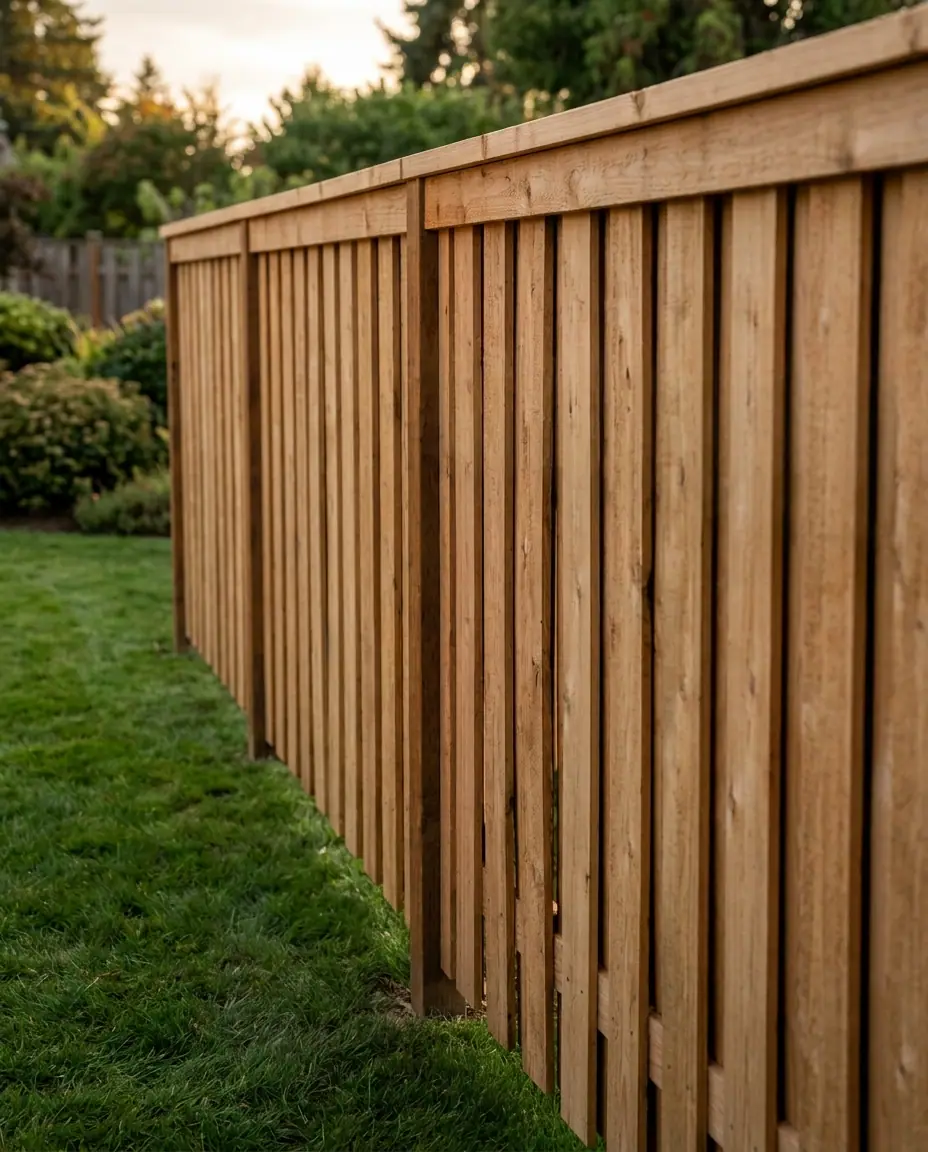
Ironclad Fence Norman builds board-on-board privacy fences across Norman, OK and Cleveland County, in cedar and pressure-treated pine, at 6 and 8 feet, with top caps, trim and matching gates. Each front board overlaps the gap between two back boards, so the fence stays fully private even after the wood dries and shrinks. As a Norman fence company, we build this heavier style on galvanized steel posts set in concrete, with three rails on a 6-foot fence. For other wood styles, see wood fence installation.
Why us
Why Choose Us for Board-on-Board Fences in Norman, OK
Board-on-board is the most private wood fence there is, if the overlap and the frame are done right.
-
Overlap That Stays Closed
We space the back layer evenly and center every front board over a gap with a real overlap, so no line of sight opens as the wood shrinks.
-
Framed for the Extra Weight
More boards mean more weight and wind load. Steel posts and three rails keep a board-on-board fence straight.
-
Two Layers, Fastened Right
Each layer goes to every rail with galvanized or stainless ring-shank nails, so boards don’t loosen or streak.
-
A Finished Top Line
An optional cap and trim board hides uneven board tops and sheds rain off the end grain.
Services
Board-on-Board Fence Services in Norman, OK
Board-on-board works in either wood and at either height. Compare it with other privacy fence styles.
-
Cedar Board-on-Board
Overlapped western red cedar, the premium version of this style. More on cedar fences.
-
Pine Board-on-Board
Pressure-treated pine, where the overlap matters most because pine shrinks the most. More on pine fences.
-
8-Foot Board-on-Board
Extra height with a fourth rail and deeper posts for the added weight and wind.
-
Cap & Trim Board-on-Board
A flat cap and trim board along the top for a finished, furniture-like look.
-
Side-by-Side Conversions
A second layer added over the gaps of a sound existing fence.
-
Matching Gates
Overlapped boards on a welded steel gate frame, so the gate is as private as the fence and doesn’t sag.
Compare
Board-on-Board vs. Side-by-Side vs. Shadowbox
Three ways to hang the same boards, with very different results for privacy, looks and wind.
Board-on-Board
Most private
Two overlapped layers on one side. No see-through from any angle, even after shrinkage. Heaviest and catches the most wind; finished on the board side.
Side-by-Side
Simplest
One layer, boards butted together. Private when new, but small gaps open as the wood dries. Lightest and most economical.
Shadowbox
Good-neighbor
Boards alternated on both sides of the rails. Looks the same from both yards and lets wind through; you can see through at an angle. More on shadowbox fences.
How We Build Board-on-Board
- Overlap
- About an inch on each edge, with the back layer spaced evenly first.
- Posts
- 2-3/8″ galvanized steel in concrete, 24–36 inches deep on a 6-foot fence.
- Rails
- Three rails on a 6-foot fence, four on 8 feet.
- Fasteners
- Galvanized or stainless ring-shank nails into every rail, on both layers.
- Top
- Dog-ear or flat boards, or a cap and trim board for a finished line.
Cost
What Affects the Cost of a Board-on-Board Fence?
Board-on-board costs more than side-by-side because it uses more wood. Your written quote can show both, so you can compare.
Get a free board-on-board estimate- Length and height
- Total footage, and 6 vs. 8 feet.
- Wood
- Cedar or pressure-treated pine.
- More boards
- Board-on-board uses noticeably more boards than side-by-side.
- Top finish
- Plain tops, or a cap and trim board.
- Gates and site
- Gates on steel frames, slopes, access and old fence removal.
Timeline
How Long Does a Board-on-Board Fence Take?
Hanging two layers takes a bit longer than one, but most board-on-board fences are still done in a few days.
- From your call to the on-site estimate, typically
- 1–3 days
- For in-stock cedar, pine and steel posts
- 0–5 days
- To build a typical 100–250 foot board-on-board fence
- 1–3 days
- From request to finished fence for most homes
- 1–3 weeks
Permits or HOA approval can add 3–14 days before we start. Pine needs to dry before it’s stained; cedar can usually be stained sooner.
Process
Our 4-Step Board-on-Board Fence Process
-
1. Estimate & Layout
We measure, mark gates, and help you choose wood, height and top finish, then send a written, itemized quote.
-
2. Locates & Approvals
We call OKIE811, check City of Norman and HOA rules, and pull any permit the fence needs.
-
3. Posts & Rails
Steel posts go in concrete on a string line, then three rails per section are bracketed to them.
-
4. Two Layers & Walkthrough
We space the back layer, overlap the front layer, add cap, trim and gates, then walk the fence with you.
Questions
Board-on-Board Fence FAQ — Norman, OK
What's the difference between board-on-board and shadowbox?
Board-on-board puts two layers of boards on the same side of the rails, with each front board overlapping the gap between two back boards, so you can't see through it from any angle. Shadowbox alternates boards on opposite sides of the rails with a gap between them, so it looks the same from both yards and lets wind through, but you can see through it at an angle.
Does board-on-board look good from both sides?
The board side is the finished face. The other side shows the rails and posts, like most privacy fences. A top cap and trim board make the finished side look sharper, and steel posts can sit behind the boards. If both neighbors need a finished face, shadowbox is the better style.
How much do the boards overlap?
Typically about an inch on each edge. That's enough that the gap never opens up as the boards dry and shrink, especially with pine, which shrinks the most. We space the back layer evenly first, then center each front board over a gap.
Is a board-on-board fence heavier?
Yes. It uses noticeably more boards than a side-by-side fence, so it's heavier and catches the full force of the wind with no gaps. That's why we build it on galvanized steel posts set in concrete, with three rails on a 6-foot fence.
Can you convert my side-by-side fence to board-on-board?
Often, if the posts and rails are solid. We add a second layer of boards over the gaps on the existing fence. If the posts are wood and starting to rot, it's better to replace them first, since the extra boards add weight and wind load.
Does a board-on-board fence need a top cap?
It doesn't need one, but a cap and trim board give it a finished look, hide the uneven board tops and shed water off the end grain, which helps the tops of the boards last longer.
Is board-on-board worth it with pine?
Especially with pine. Pressure-treated pine shrinks more than cedar as it dries, so a side-by-side pine fence opens the most noticeable gaps. Overlapping the boards keeps a pine fence fully private after the first summer.
Free estimate
Get a Free Board-on-Board Fence Estimate
Tell us roughly how much fence you need, the height and whether you want cedar or pine. We’ll call to set a time to measure, then send a written, itemized quote.